Hornsea wind zone: two projects online, Hornsea 3 under way, Hornsea 4 shelved
Ørsted's North Sea development has delivered two of the world's largest offshore wind farms. Its third phase is in construction with Apollo as a half-owner, while the fourth has been discontinued in its current form.

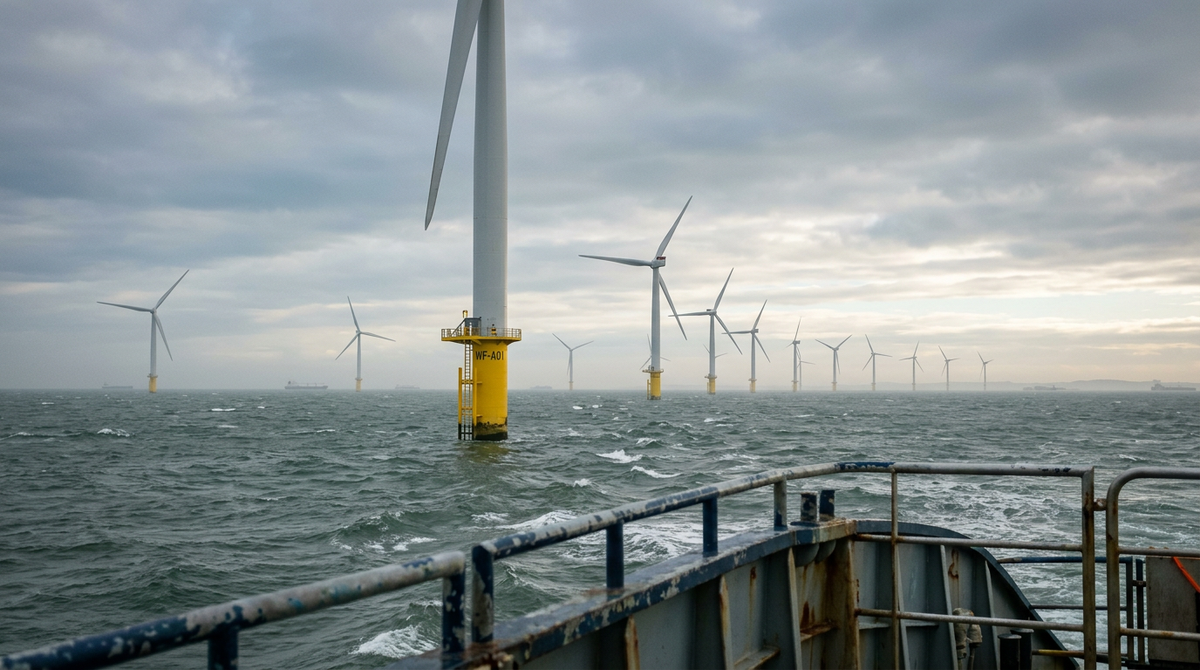
Hornsea, a Round 3 offshore wind development in the North Sea, is now a mix of operating capacity, a major build under way and a cancelled project.
The zone lies 120 km (75 miles) off the east coast of England. The wider development was planned to reach up to 6 GW. Hornsea One and Hornsea Two are operational and owned by Ørsted. Hornsea Three is being built, and Hornsea Four has been shelved.
Hornsea One and Two
Hornsea One has 174 Siemens Gamesa 7 MW turbines and a nameplate capacity of 1,218 MW. Planning consent came in December 2014. Offshore construction began in January 2018, and the first turbines supplied power to the UK grid in February 2019. The last turbine was installed in October 2019 and the project was completed in early 2020. It was the world's largest offshore wind farm on completion.
Hornsea Two received planning permission in August 2016. It has 165 Siemens Gamesa 8.4 MW turbines and a capacity of 1,386 MW. First power was achieved in December 2021 and the project was fully operational in August 2022. It overtook Hornsea One as the world's largest offshore wind farm.
The zone's development history runs through several owners. SMart Wind, a joint venture of Siemens and a Mainstream Renewable Power-led consortium, won the zone in the Crown Estate's Round 3 process. Ørsted, then DONG Energy, joined in 2011 and took full ownership of Project 1 in early 2015. By August 2015 it had acquired the rights to the remaining subzones.
The Hornsea One contract for difference had a strike price of £140 per MWh in 2012 prices.
Grid incident in 2019
Hornsea One was involved in the widespread power cut of 9 August 2019. A lightning strike on a 400 kV transmission line led to the disconnection of Little Barford Power Station (641 MW), Hornsea (737 MW) and small generators. Together they removed 1,878 MW from the system within minutes, more than the 1,000 MW limit.
Grid frequency fell and automatic load shedding began. About 1.1 million customers lost supply. Power was restored at 17:37. The source says Hornsea disconnected because of a software flaw, which was fixed the next day.
Hornsea Three under construction
Hornsea Three is planned at 2.9 GW across 696 square kilometres, east of Projects 1 and 2. Once complete, it is expected to be the largest offshore wind farm in the world. Consent was granted on 31 December 2020. Construction started in 2023, with completion expected at the end of 2027.
The project is planned to use up to 231 Siemens Gamesa 14-236 DD turbines of 14 MW each. In December 2025, Ørsted sold half of the project to Apollo Global Management for $6.1 billion.
Recent milestones include:
- February 2026: the first XXL monopile foundations arrived at Teesworks. Each is about 90 m long, 8 to 11 m in diameter and weighs 1,670 tonnes. Haizea Wind Group made them in Bilbao, Spain.
- March 2026: Jan De Nul completed installation of the first export cable. It consists of two HVDC cables linking the wind farm to an onshore converter station near Swardeston, Norfolk.
The offshore HVDC converter was built in Map Ta Phut, Thailand, and fitted out with high-voltage electrical equipment in Haugesund, Norway.
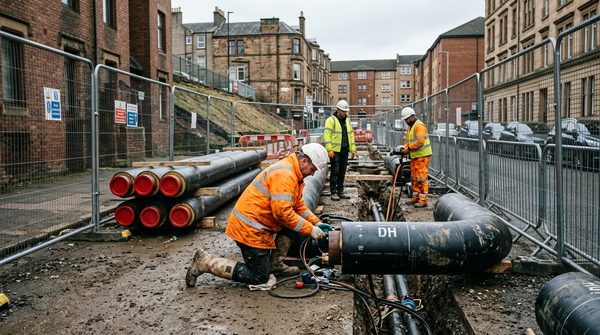
Onshore work has met some obstacles. The very wet winter of 2024/25 complicated installation of the underground cables, and flint cobbles affected horizontal directional drilling at the shoreline.
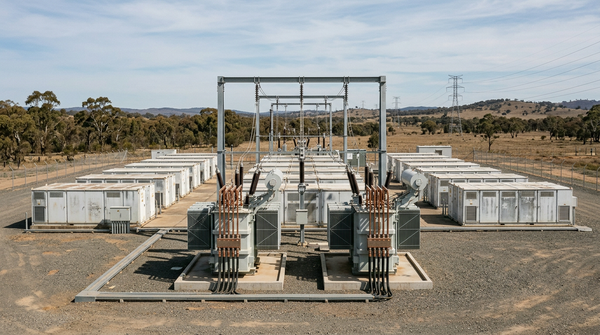
Consent was also given in early 2023 for a 600 MWh (300 MW output) battery storage plant at Swardeston. It is to use 120 Tesla Megapack units.
Hornsea Four discontinued
The UK government approved Hornsea Four in July 2023. Ørsted's planned capacity for the project was 2,400 MW.
On 7 May 2025, Ørsted said it would discontinue the project "in its current form". It said that since the contract for difference award in September 2024 the project had faced several adverse developments. It cited continued increases in supply chain costs, higher interest rates and greater risk in constructing and operating the project on the planned timeline.
Environmental issues
The RSPB has raised concerns about the impact on bird colonies in the region. Work on Hornsea Four's consent also required further analysis of effects on kittiwake, razorbill and guillemot populations in the Flamborough and Filey Coast Special Protection Area.
In 2023, 1,500 kittiwake nest boxes were built on an offshore pole near RSPB Minsmere and Lowestoft.
Part of the Hornsea Four site is also scheduled for underground carbon dioxide storage, which the source says has led to conflict over use of the seabed and sea surface.