Bradford heat network gets £9m government funding boost
The Department for Energy Security and Net Zero has announced £9m to expand Bradford's city-centre low-carbon heat network, with upgrades also planned for existing schemes in Leeds and York.

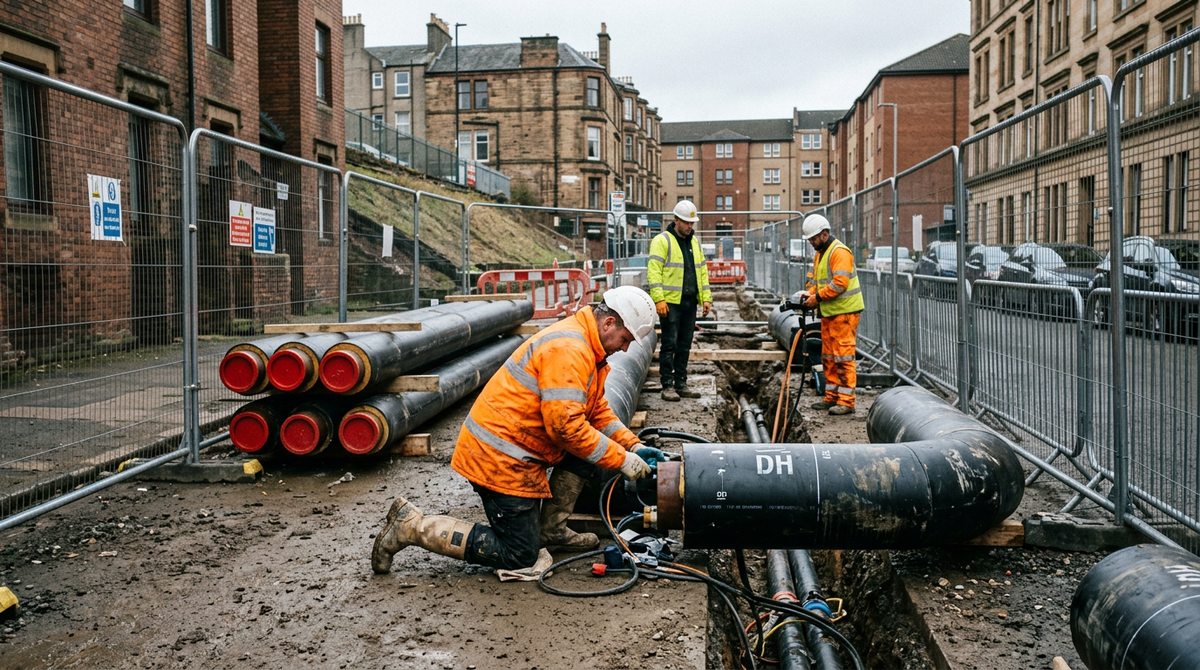
A £9m government funding package will expand a low-carbon heat network in Bradford city centre, the Department for Energy Security and Net Zero (DESNZ) has announced.
Work on the network has been under way for the past few years. According to DESNZ, buildings set to benefit from lower bills and cleaner heating include St Luke's Hospital, 255 homes, and seven schools and colleges.
How the network works
The project is powered by an array of air source heat pumps at an energy plant near Thornton Road. The network will also supply heat to Bradford City Hall and to buildings belonging to Bradford College and the University of Bradford.
Heat networks supply multiple buildings from a central source through a network of pipes carrying hot water. DESNZ says they give communities low-cost and efficient heat.
Funding and delivery
The £75m scheme is run by 1 Energy. It has been developed using a combination of private investment and government grants, according to the Local Democracy Reporting Service.
The underground pipes that carry the heat were laid before the recent pedestrianisation of Bradford city centre, the Local Democracy Reporting Service said.
Leeds and York upgrades
Existing heat networks in Leeds and York will also be upgraded as part of the England-wide programme. The government said residents on those networks would benefit from lower bills and less waste.
The planned work includes replacing leaking pipes, insulating pipework to reduce heat loss, and replacing interface units in homes.
Government comment
Minister for Local Energy and Jobs Martin McCluskey said: "Clean power and clean heat benefits communities across our country.
"Building the infrastructure to deliver it is reindustrialising the UK and rolling out cutting edge energy technology so families can benefit from lower bills, good jobs and energy security."