
Older GB renewables projects could earn nearly £9bn next year, ECU analysis finds
Research from the Energy Competitiveness Unit says legacy wind and solar assets are set for sharply higher combined subsidy and market income, and argues the renewables obligation needs reform.

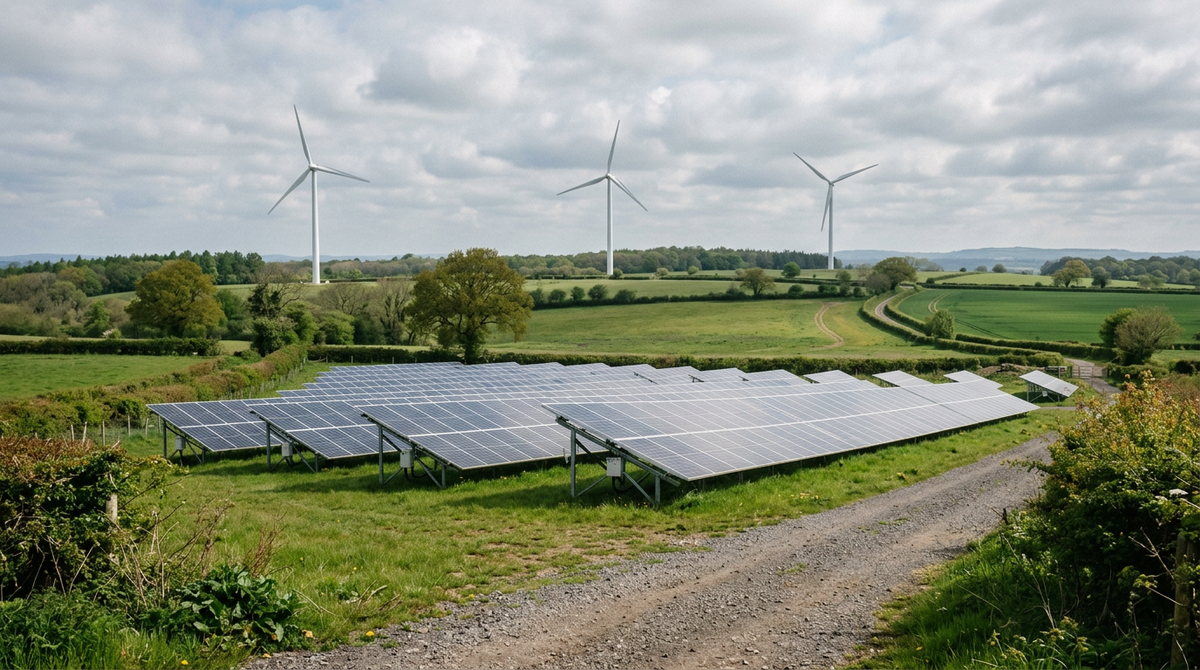
Great Britain's oldest renewable energy projects could receive close to £9bn next year, as high wholesale prices lift the cost of the legacy subsidy scheme, according to independent analysis.
The research, from the Energy Competitiveness Unit (ECU), a non-partisan research and policy project, was first reported by The Guardian. It found that projects built between 2003 and 2014 are expected to claim £4.5bn in subsidies over the next financial year, alongside £4.2bn in wholesale market revenue.
The ECU said that would leave developers with almost 50% more than they received before Russia's full-scale invasion of Ukraine pushed up gas prices in 2022.
Why subsidy costs rise with gas prices
The projects in question are supported through the renewables obligation (RO), which pays generators on top of their wholesale market earnings. Because of that structure, higher gas-driven market prices translate into higher subsidy costs.
Newer projects work differently. Since 2013, developers have competed in auctions for contracts for difference (CfDs), which pay a fixed price for each megawatt-hour generated, so costs do not move with global markets.
The ECU credited the RO with helping to start the UK's renewables industry when it launched almost 25 years ago, but said it "has been allowed to persist unsustainably". It said reform is needed if the government is serious about lowering electricity system costs in the short and medium term.
ECU director Andrew O'Brien told the Guardian that many developers are now earning "well above what they could reasonably have expected" when they invested.
Government plans and the ECU alternative
The government announced last year that it would move three-quarters of RO costs off household bills and into general taxation from April 2026. It later warned that legacy generators could face higher windfall taxes unless they give up the RO in favour of a new, partially fixed subsidy contract.
The ECU said the government's consultation on fixing generators' wholesale revenues "falls short". It wants ministers to go further, fixing subsidy payments as well and creating a new scheme.
Under the ECU's proposal, all generators would move to fully fixed-price contracts, which it calls a fair value CfD. The ECU estimates this could cut electricity costs by £3.8bn next year and by £9.2bn over 10 years.
The think tank said the new private law contracts could also give some legal protection against political risk. It pointed to the possibility that a future government sceptical of net zero could dismantle support under the RO, a threat it said Reform UK has signalled.
"It is in the interests of everyone," the ECU said, to put a credible long-term plan in place that can withstand shocks.
In his budget speech last month, chancellor John Healey said the government would further loosen the hold of international gas prices on bills by moving more older renewables onto fixed-price contracts.
Industry response
Tara Singh, chief executive of RenewableUK, said renewables are still helping to restrain bills by pushing expensive gas off the system. She cited UCL research that found wind has saved consumers £100bn since 2010, even after accounting for support schemes such as the RO.
Singh also pointed to the windfall tax that took effect in July. She said RO-supported projects now pay the Treasury up to 80p of every additional pound earned from market prices above £82.61 per megawatt-hour.
She said the average wholesale electricity price over the past 12 months has been above £100 per megawatt-hour, and often higher. The fastest way to protect consumers from future price shocks, she said, is to build more cheap, homegrown renewable power.