Berlin drafts negative-emissions strategy to go beyond 2045 net-zero target
Germany's economy and climate ministry is preparing a long-term plan for removing CO2 from the atmosphere, including technical carbon sinks, to offset emissions that cannot be eliminated.

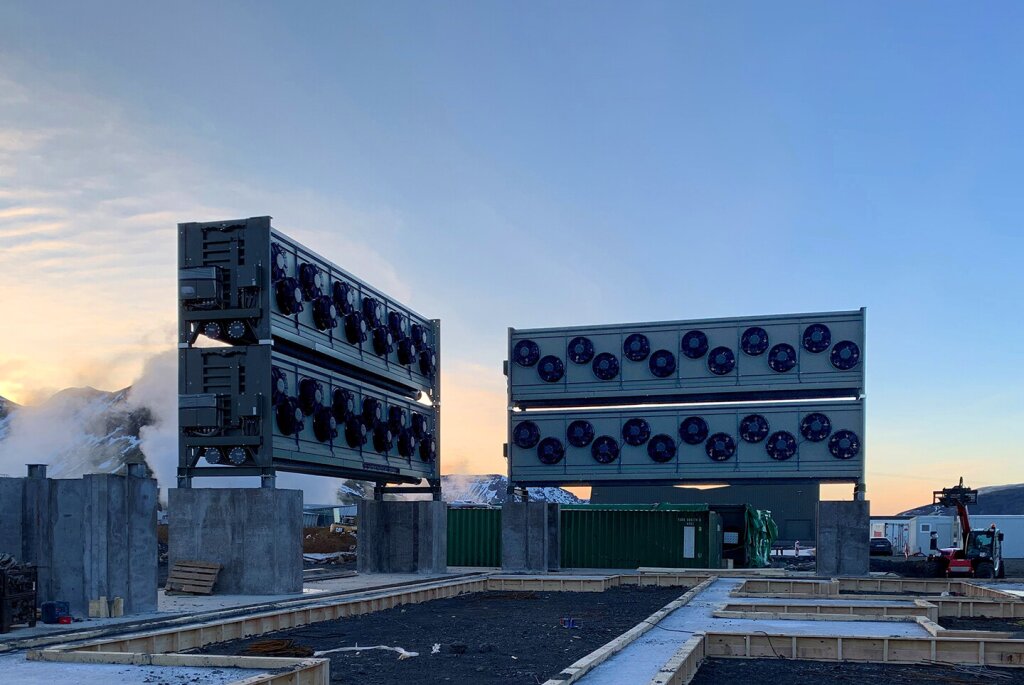
Germany's Ministry of Economics and Climate is developing a long-term strategy for negative emissions, centred on removing significant volumes of CO2 from the atmosphere.
A draft document is due to be presented later this year. In it, the ministry argues that Germany needs a strategy that reaches beyond its goal of net-zero greenhouse gas emissions by 2045.
The draft points to the need for continuous CO2 removal, citing the IPCC's indication that the global CO2 budget for limiting warming to 1.5°C will be depleted by 2030.
Residual emissions
The ministry acknowledges that some emissions, notably in industry and agriculture, will persist even under a net-zero strategy. It says roughly 5% of 1990 greenhouse gas levels, estimated at 63 million tonnes of CO2 equivalent a year, will have to be removed.
The draft sets out a mix of approaches:
- direct air carbon capture, utilisation and storage (DACCU/S)
- enhanced natural carbon sinks and soil management
- biomass production and marine biomass
- carbon capture, utilisation and storage (CCUS) applied to waste
Targets and open questions
The strategy is expected to feed interim targets for technical carbon sinks into Germany's climate law for 2035, 2040 and 2045.
The feasibility of direct air capture remains uncertain. It needs storage solutions comparable to those used in conventional carbon capture and storage (CCS), an approach Germany has so far avoided onshore.
The government's push for offshore CCS has also met resistance. Concerns centred on using tax money to finance the infrastructure while other climate protection measures compete for funding.
International comparisons
Germany is aligning its approach with other countries. Denmark is targeting a 110% emission reduction by 2050. The UK plans technical removal of 5 million tons of CO2 a year from 2030. The US is promoting CO2 removal through initiatives such as its 'carbon negative shot'.
The EU is also expected to clarify the role of negative emissions in setting its 2040 climate target.
The German government intends to present a comprehensive evaluation of negative emission methods. It will be accompanied by proposals on monitoring, certification, economic incentives and integration into the EU emissions trading system.